

The name is odd, the search spike is real, and no, you do not have to turn moonlight into another assignment.
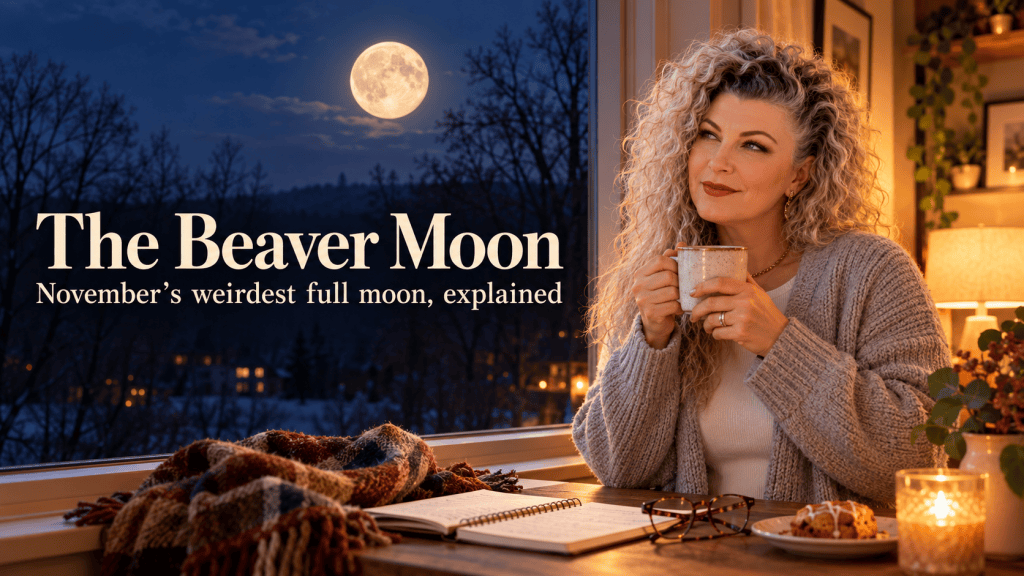
The November full moon is called the Beaver Moon, which sounds less like an ancient celestial event and more like a woodland character who sells artisanal jam at the farmers’ market.
I looked it up, especially this year, because November is already doing the most: the calendar is suddenly full, the daylight has clocked out early, and somebody somewhere has started playing Christmas music in a shop. Then the moon arrives and suddenly people are not too festive anymore, problems pop up here and there, and no one is looking forward to starting a new day again.
So: what is the Beaver Moon, why is it called that, and what are we supposed to do with it? Happily, the answer does not require knowing all the celestial objects and where each is at any given point in time.
When is the Beaver Moon in 2026?
The November 2026 full moon peaks on Tuesday, November 24. It’s also a supermoon, and it will appear full on the nights around its peak, so the evenings of November 23 and 24 are the ones to watch. The exact best viewing time depends on where you are, because the moon has never once checked our time zones before making an entrance.
If you’re in Greece, the peak is around 4:53 p.m. local time. That is a very civilized hour for a moon appearance. No midnight commitment, no alarm, no “I’ll just stay up a little longer” that somehow becomes 1:47 a.m.
Why is it called the Beaver Moon?
The name is usually linked to beavers preparing their winter homes and to the season when beaver trapping took place in North America. Different sources give different versions of the explanation, which is a useful reminder that full-moon names have traveled through different communities and calendars. November’s moon is also called the Frost Moon in some traditions; the names are seasonal signposts, not one universal official label.
But apparently, people really do want the backstory. In Google’s 2024 search-trends roundup, “what is a beaver moon” was the top trending question about supermoons, while “why is it called beaver moon” was a breakout search. So if you have ever typed it into your phone, you were in excellent company.
What does the Beaver Moon mean astrologically?
In 2026, the full moon is in Gemini, opposite the Sun in Sagittarius. In astrology, Gemini is associated with communication, curiosity, questions, and the little details; Sagittarius is associated with the bigger picture, beliefs, and the urge to make meaning out of everything. Put them together and the theme is basically: What do I know, what am I assuming, and have I actually asked the question?
So, is it a good moon or a bad moon? I’d call it a useful thinking-and-talking moon, if you enjoy working with astrology. It can be a nice symbolic prompt to clear up a misunderstanding, get curious instead of jumping to conclusions, or notice where the small facts and the big story aren’t matching. It is not a cosmic warning that something awful is about to happen, and there’s no evidence that this full moon predicts personal disasters. Astrology can offer a language for reflection; it can’t tell you what bad thing is lurking around the corner.
My practical reading: ask the question, get the actual information, and maybe don’t send the emotionally loaded text while you’re still composing its sequel in your head. Gemini loves a conversation. Your group chat may appreciate a little editing.
My very un-grand Beaver Moon plan
I love a moon with a dramatic name. I also love not turning every interesting thing into homework. There are enough things in November already asking for my attention; the moon can have a moment without me assembling a twelve-step ritual and sourcing ethically harvested moonwater from a boutique in the woods.
My plan is simple: look up if I get the chance. Maybe I’ll have a warm drink. Maybe I’ll notice the sky while I’m doing something ordinary and think, Well, that’s lovely. That counts. Magic doesn’t become more legitimate because you performed it while standing in a complicated pose beside seven objects you had to order online.
If you want a tiny moon check-in, try this: What am I getting ready for, and what would make the next few weeks feel a little kinder? You can answer while you’re walking, brushing your teeth, or waiting for the kettle. The moon will not inspect your stationery.
That question feels right for November, when “getting ready for winter” can mean anything from buying the good tea to admitting you need fewer plans. Mine is probably a mix of both. I’m looking forward to the cozy parts—longer reading stretches, warm lights, the feeling of closing the door on a chilly evening—and trying not to treat rest like a prize I have to earn first. (Btw, any good tea you wish to recommend??)
A little moon magic for low-energy days
If the Beaver Moon leaves you wanting something gentle and witchy, my book Easy Magic for When You Can’t Get Out of Bed is for the days when even the smallest task feels like a committee meeting. It blends gentle ritual, CBT, and nervous-system understanding, with practices designed for very low-energy moments. You don’t have to be standing, glowing, or “making the most of the season” to belong in your own magic.
So there you have it: November’s full moon has a beaver-related name, people search for the explanation, and your only required task is perhaps to glance out a window. If you miss it, the moon is famously bad at holding grudges.
FAQs
What date is the Beaver Moon in 2026?
It peaks on November 24, 2026. It will look full on the evenings around that date; check a local moonrise calendar for your area.
Why is November’s full moon called the Beaver Moon?
The name is commonly connected to beavers preparing for winter and to the historical trapping season. Other seasonal names are used in different traditions.
Is the Beaver Moon a supermoon in 2026?
Yes. The November 2026 full moon is a supermoon.
Do I need to do a ritual for the Beaver Moon?
Nope. You can watch it, think about the season ahead, or simply carry on with your evening. There is no moon attendance sheet.
Love my writing? You can grab my books directly from my website or through my Amazon author page. When you purchase from my website, a larger portion of the sale goes directly to supporting my writing, allowing me to create more stories, mental health resources, and magical guides without relying on algorithms or advertising. You’ll also find exclusive bonuses, free reader gifts, and occasional special offers that aren’t always available elsewhere. If Amazon is your preferred bookstore, that’s perfectly fine too. Either way, thank you for supporting an independent author who spends an unreasonable amount of time talking to fictional people and turning it into books.
The Daily Dose of Romance has moved into its new home! Every day, a fresh FREE romance story will be waiting for you.


Leave a Reply