


How to acknowledge a changed relationship, make room for what you miss, and choose one thing that supports you now.
A friendship ends, a marriage breaks down, or someone you love stops being part of your everyday life. They’re still alive, but the relationship you relied on has changed. You reach for your phone to tell them something, then remember. Even an ordinary Tuesday can contain a small loss: the conversation you would have had, the familiar company, the assumption that someone would be there.
Samhain can be a time to acknowledge these losses alongside remembering the dead. You don’t need to pretend the person never mattered, or decide that you’ve finished missing them. The practice below is a way to name what has changed and consider what you need now. It won’t make another person return, explain their behaviour, or remove your feelings. Fortunately, it also requires no cauldron.
Name What You’re Missing Before Trying to Release It
“Let them go” sounds straightforward until you realise you’re missing several things at once. An ex-partner might represent affection, shared routines, and a future you expected. A lost friendship might leave you without someone who understood a particular part of you. Naming those losses separately makes it easier to see what could help.
Try finishing this sentence: “What I miss most is…” Be concrete. “Having someone to talk to after work” gives you more information than “Everything.” “The holiday we planned” identifies a lost future. “Feeling important to them” names something painful that deserves attention.
Some losses also leave unanswered questions or uncertainty about whether the relationship might return. Pauline Boss’s work on ambiguous loss offers a useful way to understand losses that remain unresolved. You can acknowledge that uncertainty without making your whole life wait for an answer. For this ritual, concentrate on what you know has changed, rather than predicting what the other person will do.
A Ten-Minute Ritual to Acknowledge the Change
You’ll need paper, a pen, an envelope or folded sheet, and a lamp or battery candle. Choose a time when you won’t immediately need to answer messages or manage somebody else’s dinner. Keep a drink nearby. This is a private reflection, not an audition for Most Composed Witch.
At the top of the page, write: “This relationship has changed, and I’m allowed to acknowledge what I’ve lost.” Underneath, write three short paragraphs. First, name what you valued: a memory, the companionship, or something you learned. Second, describe what is different now, using facts rather than guesses. For example: “We no longer speak regularly,” or “We are no longer planning a life together.”
In the third paragraph, name what you need this week. Perhaps you need company, fewer reminders, or help sorting out practical matters. You might write: “I need someone to talk to on Sunday evenings,” or “I need to stop checking their profile before bed.” You don’t have to make your feelings sound noble. “I’m hurt and I don’t know what happens next” is an honest sentence.
Read the page silently or aloud. Fold it into the envelope and put it somewhere private. Say: “This mattered. It has changed. Tonight, I’m allowed to put it down.” Switch off the light and finish. Keep the letter; you don’t need to burn anything, discard meaningful belongings, or send the person a ceremonial explanation. An envelope is quite capable of holding paper without involving the fire brigade.
Follow the Ritual With One Useful Action
The most useful part comes after the reflection: respond to one need you named. If evenings feel lonely, ask a friend whether they’d like a regular call. If photographs keep interrupting your day, move them to a private folder without deleting them. If contact is necessary, consider keeping the conversation focused on the practical matter at hand.
Choose something small enough to do tomorrow. Missing someone may continue; that doesn’t make the exercise unsuccessful. Its purpose is to acknowledge the loss and make a little more room for your present life. If writing feels too painful, stop and return to it with support, or leave the ritual aside.
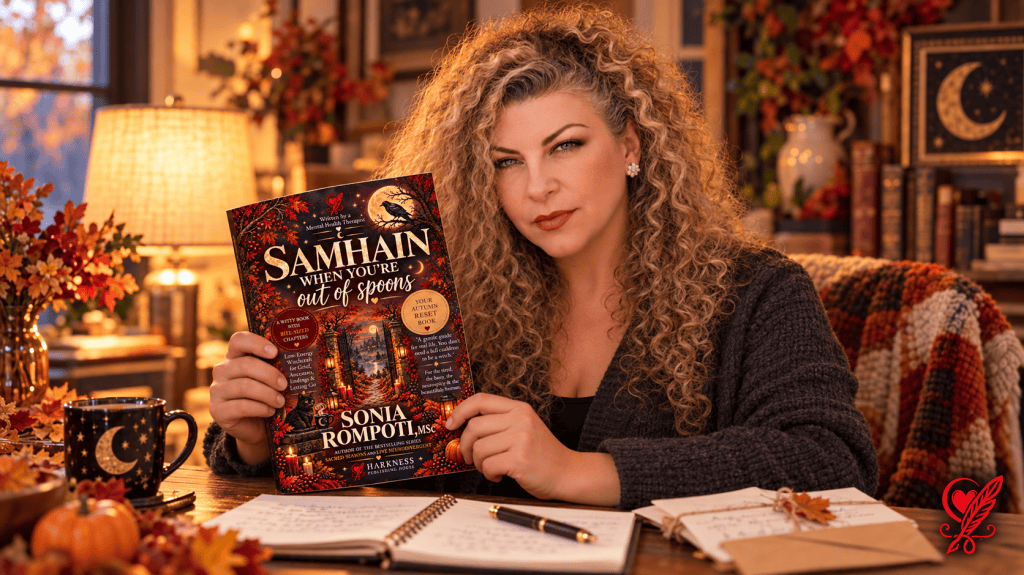
For further reading, The Myth of Closure by Pauline Boss explores unresolved loss. Wintering by Katherine May offers a personal reflection on difficult seasons and rest. My Samhain When You’re Out of Spoons includes living losses and accessible rituals for limited energy. Find it through SoniaMRompoti.com, and join my newsletter for more practical witchcraft.
You can miss what was and still make plans for tomorrow.
Love my writing? You can grab my books directly from my website or through my Amazon author page. When you purchase from my website, a larger portion of the sale goes directly to supporting my writing, allowing me to create more stories, mental health resources, and magical guides without relying on algorithms or advertising. You’ll also find exclusive bonuses, free reader gifts, and occasional special offers that aren’t always available elsewhere. If Amazon is your preferred bookstore, that’s perfectly fine too. Either way, thank you for supporting an independent author who spends an unreasonable amount of time talking to fictional people and turning it into books.
The Daily Dose of Romance has moved into its new home! Every day, a fresh FREE romance story will be waiting for you.



Leave a Reply