


There’s a specific kind of exhaustion that happens when you turn creativity into constant visibility.
Not writing itself.
Not storytelling.
Not even publishing.
Visibility.
The posting.
The marketing.
The algorithms.
The pressure to be entertaining, insightful, productive, aesthetic, relatable, vulnerable, and somehow professionally branded at all times like a tiny exhausted corporation with Wi-Fi.
A lot of authors don’t burn out from writing books. They burn out from trying to become content machines.
And honestly, the modern indie publishing world quietly rewards unsustainable behavior. Write faster. Publish faster. Post more. Build a newsletter. Start a TikTok. Open a Discord. Launch a Patreon. Create reels. Build a funnel. Optimize your metadata while sacrificing your remaining sanity to the algorithm gods.
At some point, authors stop feeling like artists and start feeling like overworked interns in their own careers.
As both an author and a mental health professional, I think burnout happens when people lose connection to the reason they started creating in the first place.
Everything becomes performance.
Even rest starts feeling guilty.
Writers begin measuring their worth through rankings, sales dashboards, newsletter open rates, and follower counts instead of emotional impact. And the problem is, those numbers constantly move. No amount of success ever feels emotionally stable if your self-worth is attached to metrics.
That’s why sustainable authorship matters far more than rapid productivity.
The authors who last are usually not the ones sprinting the hardest.
They’re the ones building a creative life they can emotionally survive.
That may mean writing slower.
Marketing differently.
Protecting privacy.
Ignoring trends that feel emotionally draining.
Creating stories that actually excite you instead of chasing whatever trope is currently being consumed by the internet at frightening speed.
Readers can feel when an author still loves storytelling. That energy matters.
One of the best pieces of advice I can give newer authors is this: build a career you can still tolerate on bad mental health days. Because life happens while you’re publishing. People get sick. Families struggle. Children need you. Grief happens. Bodies get tired. Motivation disappears sometimes.
You are still a human being before you are a brand.
And honestly, readers do not need you to become a perfectly optimized machine. They need you emotionally present enough to keep creating stories with heart.
That’s something I constantly remind myself while balancing writing, psychology, motherhood, business, and the general emotional chaos of being a creative person online in 2026, where apparently everyone is expected to produce fourteen forms of content before breakfast.
The irony is that readers usually connect most deeply to authors who feel human.
Not perfect. Human.
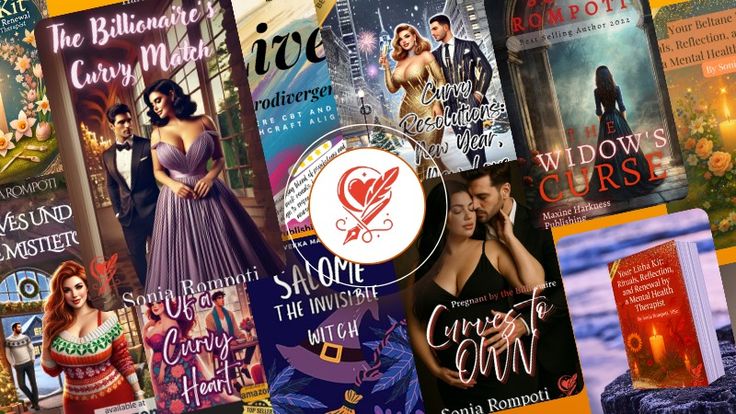
That’s why I focus so heavily on emotional depth in my own books, whether I’m writing witchcraft-infused romance, curvy heroines, grief, longing, emotionally intelligent relationships, or dangerous attraction wrapped in tenderness. I want readers to feel something real beneath the fantasy.
Because storytelling should still feel alive.
Not industrialized.
If you’re an author currently feeling exhausted, discouraged, or emotionally flattened by the pressure to constantly produce, this is your reminder that slow, sustainable creativity is still valid.
A career built slowly can still become something extraordinary.
And protecting your mind while building it is not weakness.
It’s survival.
If you love emotionally layered romance, honest conversations about writing, emotionally intelligent characters, witchy atmosphere, curvy heroines, and stories that blend emotional depth with tension and longing, you can explore my books through Harkness Publishing House and join my reader world for more conversations about storytelling, psychology, and surviving the creative internet without becoming spiritually dehydrated.


Leave a Reply