


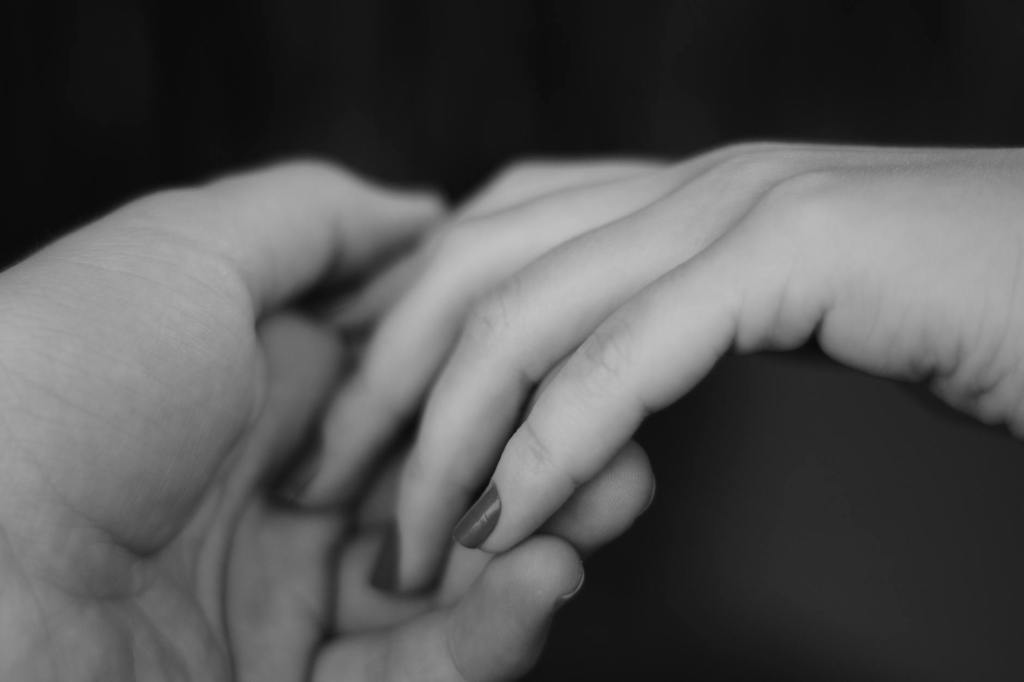
It had been eighteen months since someone had touched her — properly, deliberately, with the full intention of making her feel human. Hana was aware of this in the way you were aware of a low-grade fever: not debilitating, just always there. The divorce had done it. Not the grief exactly, but the withdrawal of ordinary contact, the small touches that accumulate over a relationship like sediment. She’d underestimated how much she’d needed those until they stopped.
Then Diego had put his hand on her back to guide her through a crowded gallery opening and the entire nervous system she’d been so carefully managing went absolutely haywire.
He was a friend’s friend. An architect. He talked about buildings the way other people talked about characters in books. She’d met him three times over the past year and each time the conversation had been so easy it felt like unfair advantage.
“You’ve gone very quiet,” he said.
“Just looking.”
“At?”
She gestured vaguely at the paintings. He looked at the same paintings with the serious consideration he gave everything.
“This one,” he said, stopping. “This is why I came.”
It was a painting of a hand reaching toward something not quite in the frame. The reaching was the whole subject — not the arrival, just the reaching.
“Yes,” she said, too quickly.
He looked at her sideways.
“Hana. What’s going on with you tonight?”
She could have said *nothing*. She could have said *tired*, *long week*, any of the acceptable deflections.
“You touched my back when we came in,” she said.
Pause.
“I did,” he said carefully.
“And I overreacted to it. Internally. Which is embarrassing and you should know I’m aware of how strange that is.”
He was quiet for a moment. They stood in front of the reaching hand.
“It’s not strange,” he said.
“It’s been a year and a half since—” She stopped. “I’m sorry. I don’t know why I’m telling you this.”
“Because I asked,” he said. “And you’re honest.”
“Annoyingly.”
He turned to face her. He was doing the thing where he thought before he spoke, and she’d always found that both admirable and agonising.
“Can I take you for dinner?” he asked. “After this?”
“Diego.”
“Not as a solution,” he said. “Just dinner. You’re interesting and I’d like more of your company. That’s all I’m asking for tonight.”
“And after tonight?”
“After tonight we find out,” he said simply.
She looked at the painting — the reaching, the not-quite-arrived.
“Okay,” she said.
At dinner he didn’t touch her. He was thoughtful and funny and told her about a commission in Porto that had nearly defeated him and listened with his whole attention when she talked about her own work. When they parted outside the restaurant he held her gaze for a moment.
“Same time next week?” he asked.
“Yes,” she said.
He didn’t touch her. She noticed the deliberateness of it — the care of it. When she got home she sat in her quiet flat and thought about the painting and about reaching.
The next week, at the end of dinner, he offered her his hand.
She took it.
It was exactly enough.



Leave a Reply