


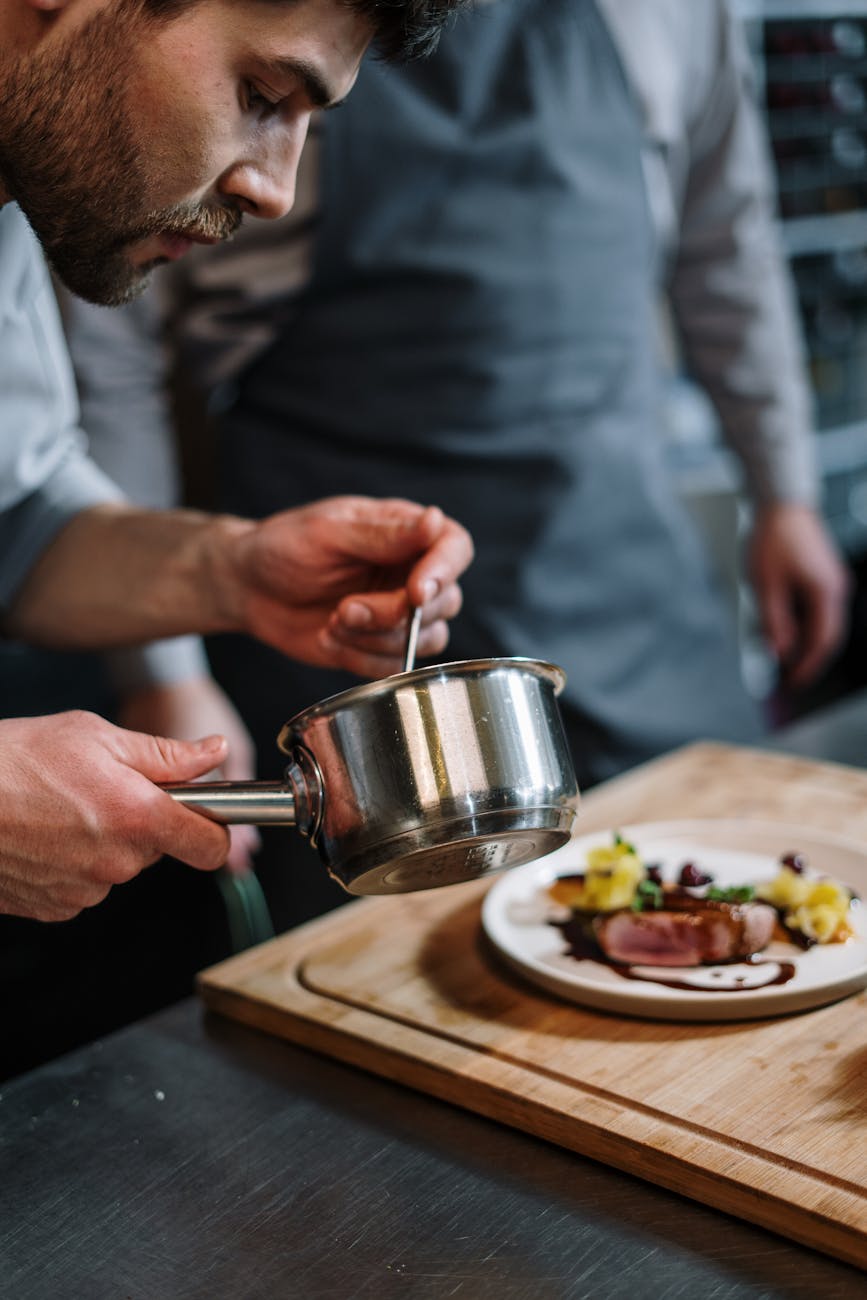
The restaurant closed at eleven. By midnight the kitchen was clean, the staff gone, and it was just Marco at the pass, eating his own food standing up the way chefs always did — the last rites of the night shift. He was used to this. He’d been used to this for fifteen years.
He was not used to the food critic sitting at the corner table with a glass of his house wine, watching him.
“You should have left with the others,” he said.
“I wanted to finish my notes.”
“It’s midnight.”
“I have a lot of notes.”
Elena Voss had reviewed his restaurant two years ago — fairly, precisely, with one criticism that had made him stare at the ceiling for a week before admitting she was right. Since then she’d been back three times. He’d noticed. He would have noticed regardless, but he’d particularly noticed.
He put a small plate on the bar.
“Come eat this,” he said.
She looked up.
“It’s not on the menu,” he said. “I made it for myself but I made too much.”
“That’s not why you made it,” she said.
“No,” he agreed. “It’s not.”
She came to the bar. She sat down and looked at the plate — a simple thing, pasta with bottarga and lemon, the kind of cooking that only worked if everything was right. She tasted it.
She was quiet for a long moment.
“This is what you should be serving,” she said.
“It’s what I eat.”
“That’s my point.”
He sat across from her with his own plate and they ate together at the empty bar with the lights low and the city quiet outside, and she told him why his second course was overly composed and he told her she was right, which was not something he said to critics, and she said she knew, which was not something critics said to chefs.
“You’ve been back four times,” he said.
“The food is interesting.”
“Always for the food.”
She looked at him over the rim of her glass. She had the particular stillness of someone very intelligent who had decided not to rush.
“What else would it be for?” she asked.
“That’s what I’m asking.”
She turned her glass slowly on the bar. Outside, a taxi passed.
“The way you cook is like reading someone’s private correspondence,” she said finally. “I come back to understand more of it.”
Something in him went very still and then not still at all.
“Elena.”
“Marco.”
He stood. She stood. The bar between them was very narrow.
“I’d like to cook for you again sometime,” he said. “Not for review.”
“I don’t write personal meals.”
“I know.”
“When?” she asked.
“Sunday. Kitchen’s closed Sunday. I’ll cook you what I actually eat.”
She put on her coat. She gathered her notes. At the door she turned once.
“I’ll need your address,” she said.
He wrote it on the back of a menu. She took it. She left.
He stood in his quiet kitchen and thought about what he’d cook Sunday for someone who understood exactly what it meant.
He started planning before the door had even closed.
So you made it to the end… which probably means you’re the kind of person who enjoys a little romance with their coffee. If you’re in the mood for more stories about messy feelings, stubborn attraction, and women who absolutely refuse to settle for boring love, you can find all my books here.
Fair warning though. One story tends to lead to another. I’ve seen it happen. Repeatedly.



Leave a comment