


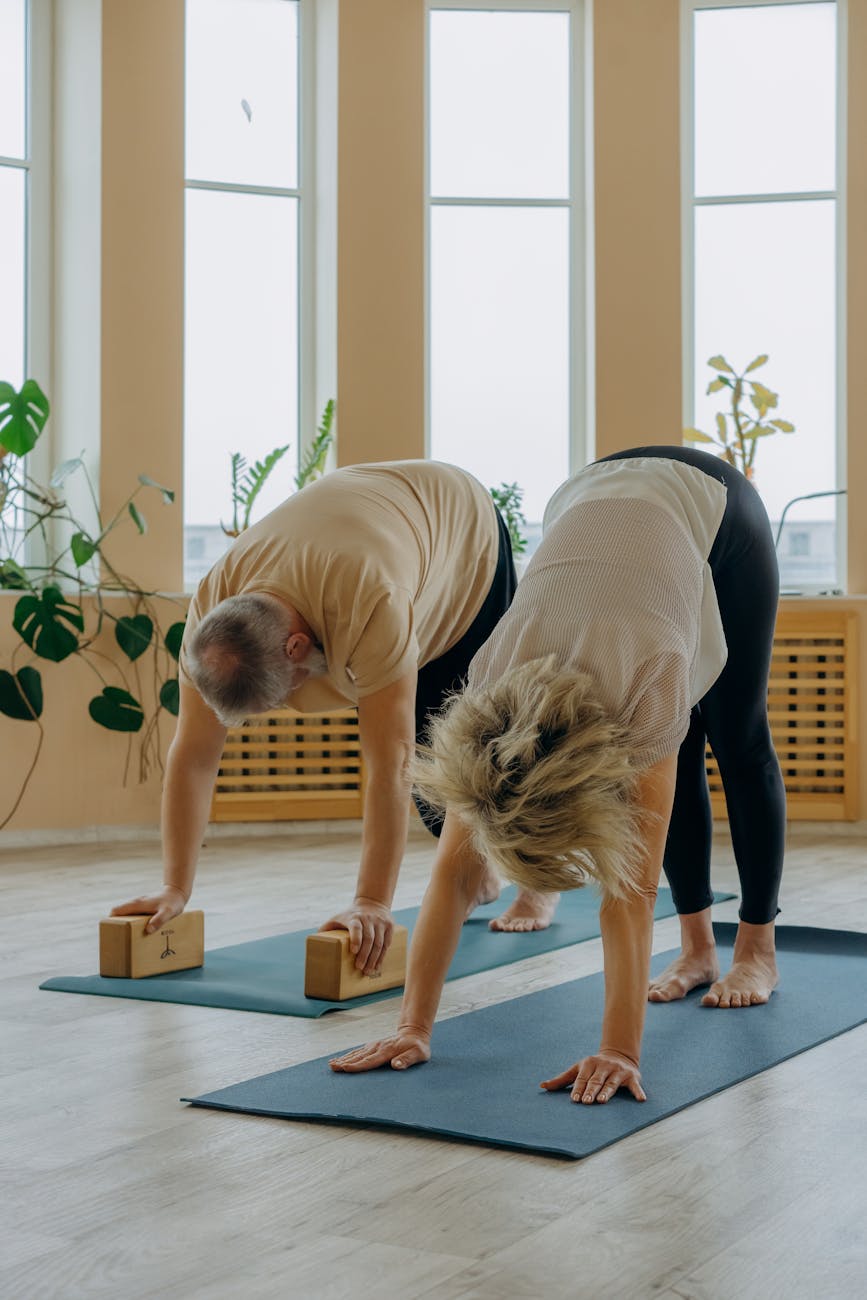
She started yoga at fifty-three because her knees hurt and her doctor said it was that or swimming. She had always hated swimming.
The instructor was not what she expected. She had expected a twenty-two-year-old. He was fifty-something with grey in his hair and moved with the ease of a body that had been paid attention to.
She was not graceful. She had never been graceful. She approached her body with the brisk utility of someone who had used it hard for decades — two children, one career, one long marriage, and the years after the long marriage, which had rearranged everything.
“Don’t force it,” he said, the first week. “You’re trying to get there. Just be where you are.”
She looked at him from her mat. “That is the least helpful instruction I’ve ever received.”
He smiled. He had the smile of a man who had been told this before.
But she came back. Week after week. Not only because of the knees — which improved — but because of the hour. An hour in which no one needed her and she was allowed, specifically instructed, to be where she was.
He learned her body’s limits before she acknowledged them herself. He modified her practice without drawing attention to it, which she found respectful. She was not a woman who responded well to being accommodated.
She asked him once why he’d started teaching.
He said: his wife had died, years ago, and he’d fallen apart, and yoga had been the first thing to put him back together. So he’d learned to teach it. To be useful with the thing that had helped him.
She sat with that.
“I left my husband,” she said. “Which is different.”
“Is it?”
“He didn’t die. He just — “ She thought about how to say it. “Became a stranger. Twenty years in and one day I didn’t know who was across the table.”
“That’s a kind of loss,” he said.
“People don’t treat it that way.”
“I know.” He looked at her steadily. “It is, though. It’s a loss of the future you thought you had. That’s real grief.”
She had not cried in this building. She had made a private rule of it.
She nearly broke it.
“Thank you,” she said. “For saying that.”
He held her gaze. There was something in his eyes she recognised — not desire, or not only — but the particular recognition of someone who had been through the unremarkable devastation of life and come out the other side still trying.
He asked her for dinner four months later. She said yes.
It was not frantic or overwhelming. It was two people who had earned a certain knowledge of themselves sitting across a table and telling the truth and finding, gently, that the truth was compatible.
She went home and called her daughter.
“Good?” her daughter said.
She thought about it.
“I didn’t know it could be this — calm,” she said. “That it could feel like breathing out.”
“That’s good, Mum,” her daughter said. “That’s a very good sign.”
So you made it to the end… which probably means you’re the kind of person who enjoys a little romance with their coffee ☕. If you’re in the mood for more stories about messy feelings, stubborn attraction, and women who absolutely refuse to settle for boring love, you can find all my books here.
Fair warning though. One story tends to lead to another. I’ve seen it happen. Repeatedly.


Leave a comment