


I don’t usually wake up and see my work reflected through the lens of a New York Times article.
And yet, here we are.
This week, the New York Times published an article asking a question a lot of writers and readers are quietly circling right now:
Can A.I. write emotionally rich romance?
I’m part of that piece, and not in a background, blink-and-you-miss-it way. I’m quoted directly, both as a psychologist and as a romance author, speaking about something I care deeply about: intimacy, embodiment, and why tools still fall painfully short when it comes to the human experience.
And yes, that felt surreal to write.
One of the points I made in the article is that A.I. fundamentally struggles with intimacy. It can describe anatomy. It can explain, very efficiently, what goes where. But it doesn’t understand what it means to be in a body, to want, to feel desired, to feel safe enough to be fully seen. That gap matters. Especially in romance.
As a mental health professional, this isn’t theoretical for me. Intimacy isn’t a biological event. It’s psychological. It’s relational. It’s shaped by memory, insecurity, confidence, shame, safety, and history. That complexity lives in people, not prompts.
That limitation became painfully obvious when I started writing plus-size heroines.
I’m a plus-size woman, and I wanted to write romance where bodies like mine aren’t apologetic, exaggerated, or turned into punchlines. I wanted confident, desirable, fully human heroines. What I found, instead, was that A.I. consistently failed at this.
Whenever a curvy character entered a scene, the language skewed toward caricature. Chairs groaning. Weight being emphasized unnecessarily. Desire reduced to spectacle. Not because the tool is cruel, but because it reflects the stories it has been fed. There are still too few nuanced plus-size heroines in mainstream romance, and the data shows.
So I rewrote. I edited. I corrected. Again and again. Especially in intimate scenes, where confidence and agency matter most.
Because people don’t read romance to see what bodies do.
They read romance to feel seen.
That line made it into the article because it’s the core of my work.
The piece also touches on something many A.I.-assisted romances share: repetitive, generic intimacy. Phrases that echo across books. Metaphors that reappear like ghosts. A strange sameness that flattens desire instead of deepening it. That’s what happens when language is statistically likely rather than emotionally grounded.
Tools can absolutely support parts of the writing process. I’m honest about that. They can help with speed, structure, and momentum. But voice, emotional truth, and responsibility still require a human on the other side of the sentence.
That’s why every book I write is edited, shaped, and emotionally curated by me.
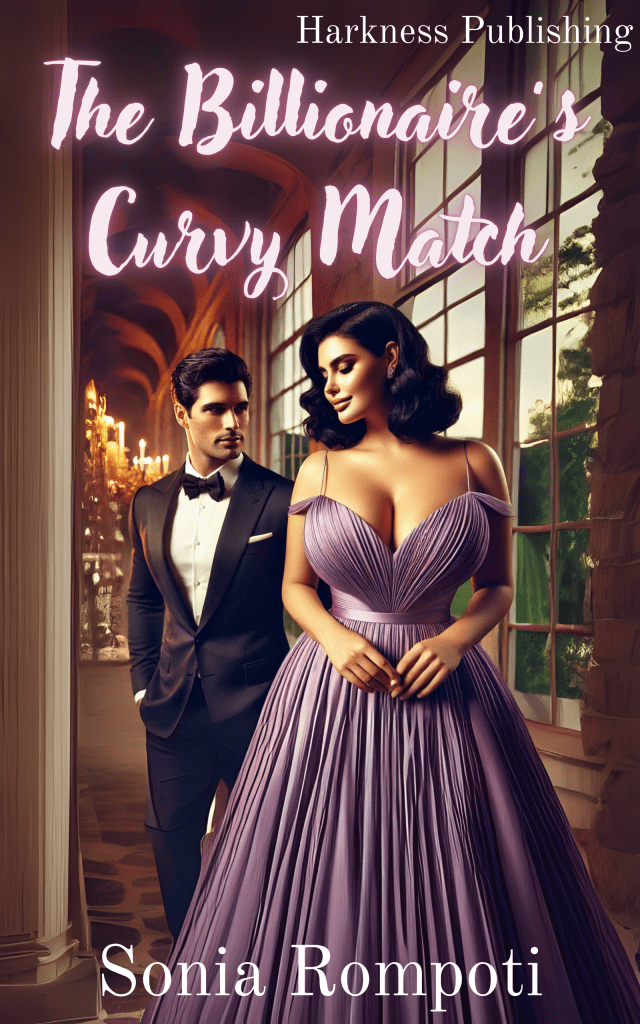
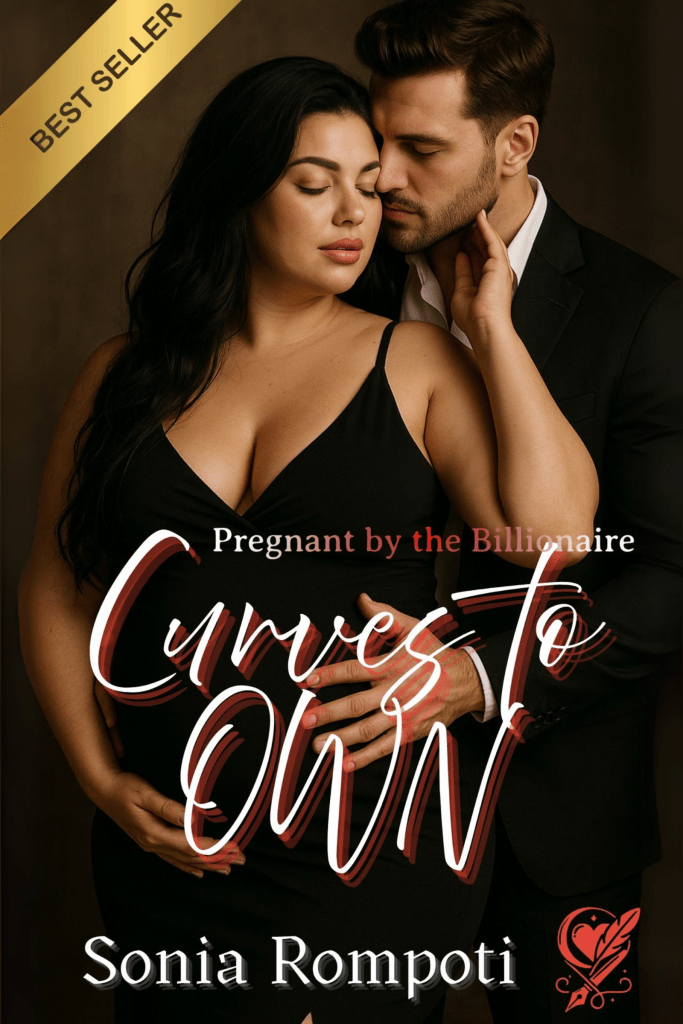
If you’ve read The Billionaire’s Curvy Match or Curves to Own, you’ve seen that firsthand. Those stories exist because I wanted romance where plus-size women are desired without explanation, confident without apology, and central to their own fantasies. Being referenced in the New York Times for exactly that work is something I’m genuinely proud of.
If you’re curious, you can read the article here.
Whether you’re excited by this moment in publishing, wary of it, or somewhere in between, I think it matters. Not because technology is new, but because it’s forcing us to ask sharper questions about what stories are for, and who they’re meant to hold.
Thank you for being here, for reading with care, and for choosing stories that prioritize emotional truth over spectacle.
— Sonia
P.S. If you came to my books for feeling, embodiment, and characters who feel real on the page, that’s not an accident. And it’s not something I’m willing to hand over to a machine.
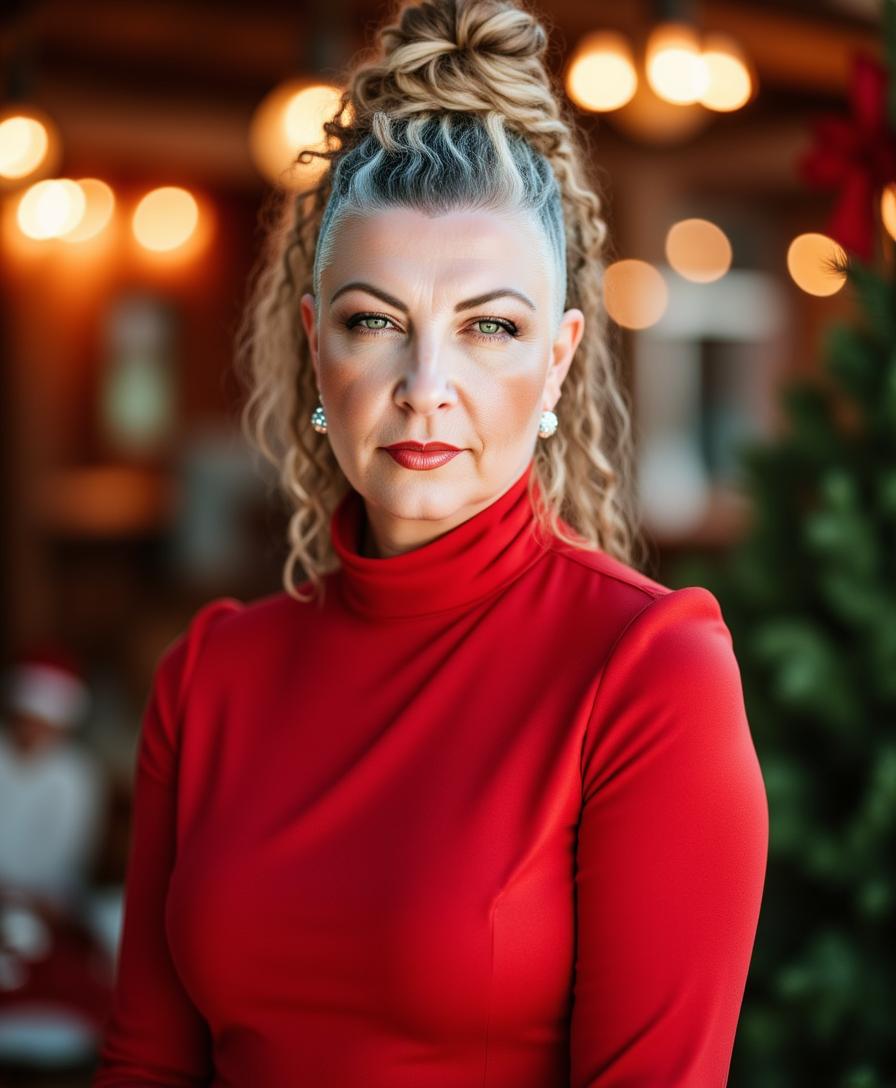


 Sonia M. Rompoti, MSc, Bsc
Leave a comment