




The laundry pile is laughing at you. Your inbox is screaming. Your kid just asked for the fifteenth snack of the day. And somewhere in all of this chaos, you’re supposed to be writing a book. Sound familiar?
Every indie author knows the fantasy of the perfect writing day: a tidy desk, a steaming cup of coffee, uninterrupted hours to create. And every indie author also knows the truth: that life rarely, if ever, gives us that luxury.
So how do you write when real life feels like it’s swallowing you whole?
The answer isn’t about finding more hours. It’s about finding ways to make the hours you already have work for you.
Shifting From “All or Nothing” to “Little by Little”
The biggest trap writers fall into is waiting for the perfect conditions. “I’ll write when the house is quiet.” “I’ll start after this project at work ends.” “I’ll focus once the kids are back in school.”
But life doesn’t hit pause. The interruptions keep coming. The trick is shifting from an “all or nothing” mindset to a “little by little” one.
Two hundred words written in a stolen 15 minutes may not feel like much. But stack those moments over a year and you’ve got 70,000 words — an entire novel. Progress isn’t about hours; it’s about showing up, even in the smallest ways.

The Power of Micro-Moments
Instead of waiting for long writing blocks, train yourself to notice micro-moments. The ten minutes in the car before school pick-up. The fifteen minutes while pasta boils. The five minutes before bed when your brain insists it’s too tired to think.
These tiny windows are gold. They may not allow for full chapters, but they’re perfect for outlining a scene, jotting down dialogue, or dictating a paragraph into your phone. The more you capture these slivers of time, the more you’ll realize your book can be built in the cracks of your day.
One of my favorite tools? Voice dictation. Open a Google Doc on your phone, hit the microphone, and just talk. Suddenly, folding laundry can also be writing time.
Create “Scene Cards” Instead of Blank Pages
Blank pages are intimidating. But a simple card with a sentence or two? That’s manageable.
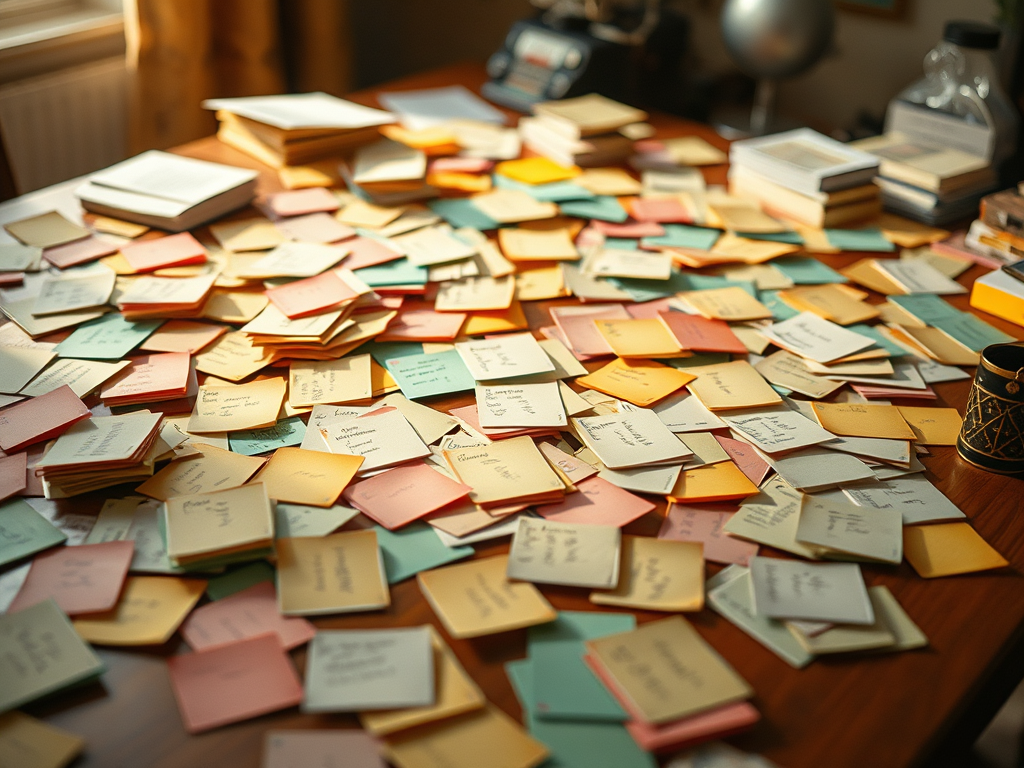
Try breaking your story down into scene cards — either digital (Scrivener, Trello, Notion) or good old-fashioned index cards. Each card is a bite-sized idea: “Emma argues with her brother about the inheritance.” “Nathaniel realizes he’s in love.”
Then, when you find a spare 20 minutes, you’re not asking, “What do I write?” You’re asking, “Which card do I want to expand today?” This method takes away the pressure of invention on demand and turns writing into a plug-and-play process.
Setting Non-Negotiable Minimums
Here’s a secret: most days you won’t feel like writing. That’s not a flaw; it’s reality. The way through is to lower the bar, and then make that bar non-negotiable.
For some authors, it’s 200 words. For others, it’s one scene card. The number doesn’t matter. What matters is the commitment: “No matter what, I’ll hit this today.”
Why does this work? Because consistency beats intensity. Even on hard days, that minimum keeps your story alive in your head. And once you start, momentum often carries you further than you expected.
Protecting Your Energy, Not Just Your Time
We talk a lot about time management, but energy management matters more. You could technically have two free hours in the evening, but if you’re exhausted, those hours won’t produce much.
Pay attention to your natural rhythms. Are you sharper in the morning, even if it’s just for 20 minutes before the world wakes up? Do you get bursts of energy mid-afternoon? Align your writing sprints with your best energy pockets, not the most convenient hours.
And don’t underestimate rest. Sometimes the most productive thing you can do for your writing is to sleep, so that tomorrow you come back sharper.
Let the Mess Show Up on the Page
When life is chaotic, writing about perfection feels impossible. So stop trying. Let the mess spill into your work. If your day has been nothing but interruptions, maybe that feeds into your protagonist’s frustration. If you’re overwhelmed, maybe that emotion becomes the heart of a scene.
Your writing doesn’t have to be neat. It has to be true. And truth, especially in indie books, is what readers connect to most.
You’re Not Behind — You’re in Progress
It’s easy to scroll past posts from other authors claiming daily 5,000-word sprints and feel inadequate. But remember: your pace is not their pace. You’re not behind; you’re building.
Your readers won’t care how many minutes a day you wrote or how many interruptions you had. They’ll care about the story you finished — the story only you could tell.

Here’s your gentle challenge:
Tonight, instead of waiting for perfect conditions, take 10 minutes. Write one scene card, dictate a paragraph, or hit your non-negotiable minimum. It doesn’t have to be polished. It just has to exist.
💌 Hug to end on: Your book doesn’t need silence, candles, or endless hours. It just needs you — showing up, little by little, exactly as you are.
And if you want more encouragement and real-world strategies to write through the chaos? Join my newsletter, it’s where I share the messy, honest, and doable ways we make this indie author life work.




 Sonia M. Rompoti, MSc, Bsc
Leave a comment