



In the vast and intricate landscape of mental health, an invisible yet palpable boundary exists, often deterring individuals from seeking the help they urgently need.
This invisible barrier, woven from threads of stigma, cultural complexities, and challenges in accessing care, profoundly impacts the mental health journey of countless adults worldwide.
Let’s embark on an explorative journey to understand these barriers, aiming not just to recognize them but to find pathways through the thicket of silence and misunderstanding that surrounds mental health.

The Weight of Stigma
Stigma, a mark of disgrace associated with a particular circumstance, quality, or person, stands as a formidable barrier to mental health services. It manifests in various forms, including self-stigma, where individuals internalize societal prejudices, leading to feelings of shame and inadequacy. Public stigma, on the other hand, embodies societal attitudes that stereotype and discriminate against people experiencing mental health challenges.
This dual-faceted stigma not only silences those suffering but also cultivates an environment where seeking help is viewed as a sign of weakness, rather than a step towards healing.

Cultural Complexities
Cultural factors add another layer of complexity to the mental health conundrum. Cultural norms and beliefs significantly influence perceptions of mental health, shaping attitudes towards symptoms, diagnosis, and treatment. In some cultures, mental health issues are often dismissed as mere character flaws or spiritual deficiencies, further entrenching the stigma and discouraging individuals from seeking professional help.
Moreover, the lack of culturally competent care exacerbates the situation, making it difficult for individuals from diverse backgrounds to find services that respect and understand their cultural context.
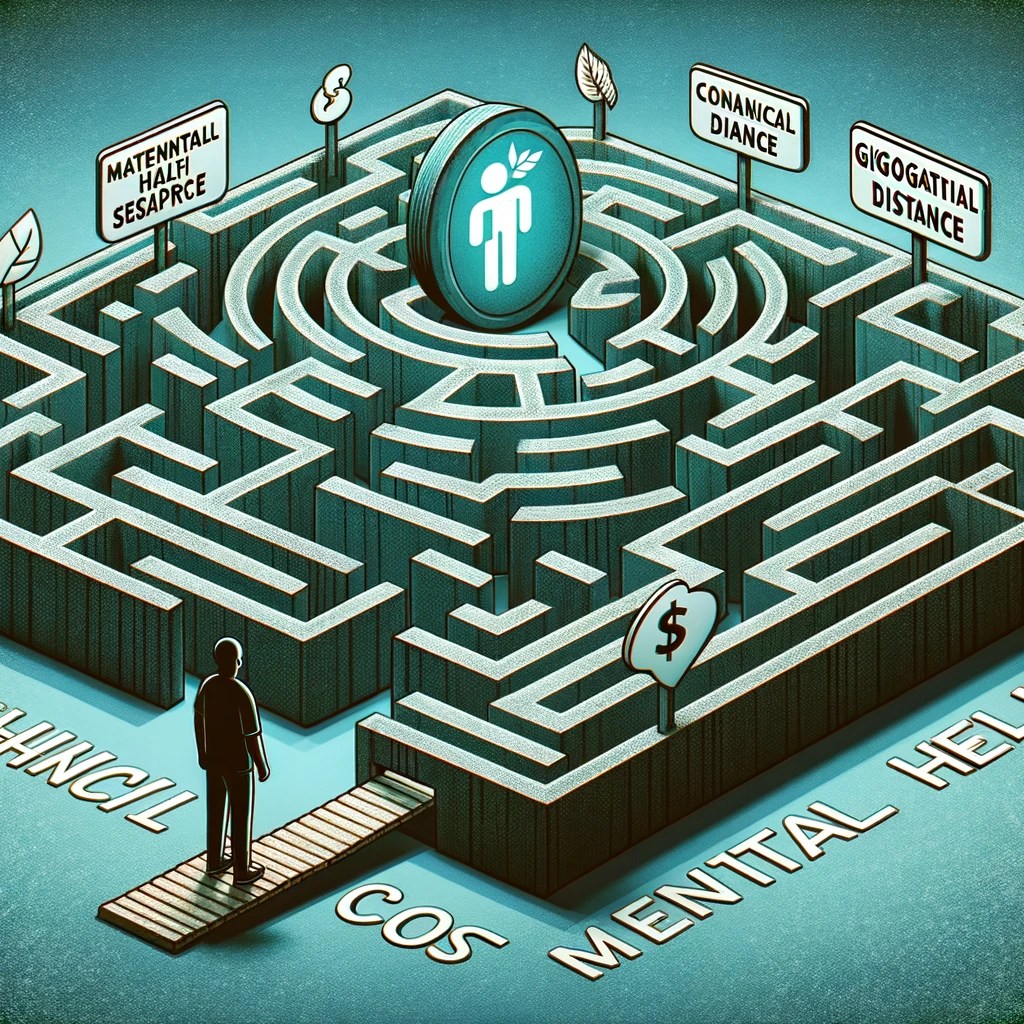
Accessing Care: A Maze of Challenges
Beyond stigma and cultural barriers, access to mental health care remains a critical issue. This encompasses a range of factors, including geographical location, financial constraints, and a shortage of mental health professionals.
For many, the mere act of finding affordable and accessible mental health services is a daunting task. The scarcity of resources in rural areas, coupled with the high costs of therapy and medications, leaves many individuals grappling with their mental health in isolation.
Pathways to Progress: Building Bridges Over Barriers
In the face of daunting barriers to mental health care, it’s crucial to forge pathways to progress that are both innovative and inclusive. Transforming the landscape of mental health support requires a multifaceted approach, targeting the root causes of stigma, enhancing cultural competency, and improving access to care. Let’s delve deeper into the strategies that can lead us toward a more supportive and understanding society.
Demystifying Mental Health Through Education and Awareness
Education plays a pivotal role in dismantling stigma. By integrating mental health education into school curriculums, public campaigns, and workplace initiatives, we can begin to demystify mental illnesses and debunk myths that fuel stigma.
Awareness campaigns must highlight the commonality of mental health issues, emphasizing that mental health is a crucial part of overall well-being, just like physical health.
Personal stories and testimonies can serve as powerful tools for connection, showcasing the reality of living with a mental health condition and the possibility of recovery and resilience.
Cultivating Cultural Sensitivity and Competence
Addressing cultural complexities involves fostering a mental health care system that is culturally sensitive and competent. Health care professionals should receive training in cultural competence to better understand and respect the diverse values, beliefs, and needs of the individuals they serve.
Creating services that are linguistically and culturally accessible can help bridge the gap for minority and marginalized communities. Furthermore, involving community leaders and members in the design and implementation of mental health programs ensures that services are relevant and respectful of cultural nuances.
Enhancing Accessibility Through Innovation and Collaboration
Improving access to mental health care necessitates innovative solutions and collaborations. Telehealth services have emerged as a vital tool, offering therapy and support over the internet or phone, thus breaking down geographical and logistical barriers. Expanding insurance coverage and funding for mental health services can alleviate financial obstacles, making care more affordable for those in need.
Additionally, partnerships between governmental agencies, non-profit organizations, and private sectors can facilitate the development of comprehensive support networks, ensuring that mental health resources are available and accessible to all segments of the population.
Encouraging Community Support and Peer Networks
Community support and peer networks play an essential role in the mental health ecosystem. By fostering environments where individuals feel safe to share their experiences and seek help, we can counteract the isolation that often accompanies mental health issues.
Peer support groups, both in-person and online, provide spaces for empathy, understanding, and shared experiences, empowering individuals on their journey toward healing. Community-driven initiatives can also promote mental health literacy, encouraging early intervention and support.
Advocating for Policy Change and Social Acceptance
Lastly, advocating for policy change at both the local and national levels is crucial for sustaining progress. Policies that promote mental health education, support workforce development in the mental health sector, and ensure equitable access to care are fundamental. Social acceptance and inclusion can be encouraged through public discourse and media representation that portray mental health issues accurately and compassionately, challenging stereotypes and fostering a more understanding society.
In conclusion, the journey towards overcoming the barriers to mental health care is complex and challenging. It requires a concerted effort from individuals, communities, and policymakers to dismantle the stigma, embrace cultural diversity, and ensure accessible care for all. By fostering an environment of understanding and support, we can move beyond the shadows of silence and stigma, towards a future where seeking mental health care is recognized not as a sign of weakness, but as an act of strength and self-compassion.
Let’s not only talk about mental health but also actively work towards breaking down the barriers that prevent individuals from seeking the help they need. It’s time to change the narrative around mental health, one conversation at a time.



 Sonia M. Rompoti, MSc, Bsc
Leave a comment