



In the ever-evolving landscape of personal finance, understanding and implementing effective debt management strategies is paramount.
As we step into 2024, the economic environment presents new challenges and opportunities for individuals aiming to navigate their financial journey with prudence and foresight.
This comprehensive guide delves into the essential strategies for managing debt, offering insights and actionable steps to secure financial stability and peace of mind in the current year and beyond.

Understanding Your Debt: The Foundation of Effective Management
A. Analyzing Your Debt Portfolio: Begin by listing all your debts, including mortgages, car loans, credit cards, and student loans. Understanding the magnitude, interest rates, and terms of each debt is crucial for formulating a tailored management plan.
B. Prioritizing Debts: Employ strategies such as the Avalanche (focusing on high-interest debts first) or the Snowball method (targeting smaller debts for quick wins) based on your financial situation and psychological preferences.

Budgeting: Your Blueprint for Financial Freedom
A. Crafting a Realistic Budget: Identify your income sources, track your expenses, and allocate funds for debt repayment. Tools like the 50/30/20 budgeting rule can provide a structured approach, ensuring essential expenses, financial goals, and personal spending are balanced.
B. Cutting Unnecessary Expenses: Analyze your spending habits and identify areas where you can cut back. Small changes, such as dining out less or canceling unused subscriptions, can significantly contribute to your debt repayment efforts.

Navigating Interest Rates: Minimize the Cost of Borrowing
A. Refinancing and Consolidation: Consider refinancing high-interest loans or consolidating multiple debts into a single loan with a lower interest rate. This strategy can reduce your monthly payments and the total interest paid over time.
B. Balance Transfer Credit Cards: For high-interest credit card debt, a balance transfer to a card with a 0% introductory rate can provide breathing room. However, be mindful of transfer fees and ensure you can pay off the balance before the promotional period ends.
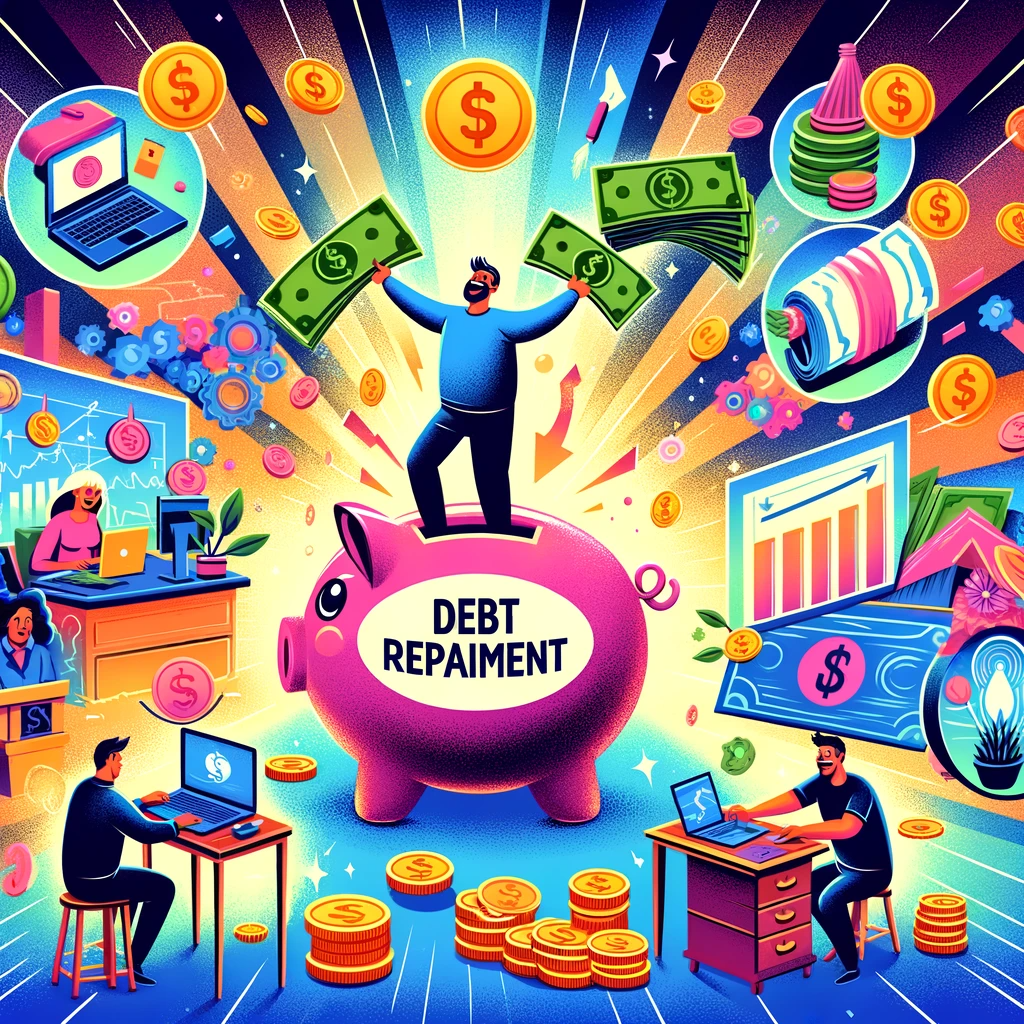
Generating Additional Income: Accelerate Your Debt Repayment
A. Side Hustles and Freelancing: Explore opportunities to increase your income, such as part-time jobs, freelancing, or selling unused items. Extra income can be directly allocated to your debt, hastening the repayment process.
B. Seeking Professional Advice: Consider consulting with a financial advisor or a credit counselor for personalized advice and strategies, especially if you’re dealing with significant debt or complex financial products.

Leveraging Technology: Tools for Efficient Debt Management
A. Debt Management Apps: Use apps and online platforms to track your debts, payments, and progress. Many tools offer features like payment reminders, debt payoff simulations, and budgeting integrations.
B. Automation: Set up automatic payments for your debts to ensure you never miss a deadline and avoid late fees. Automating savings can also build a buffer for unexpected expenses or financial emergencies.

Fostering Financial Literacy: Empower Your Decision-Making
A. Continuous Education: Stay informed about personal finance, interest rates, and economic trends. Resources like books, podcasts, and online courses can enhance your knowledge and confidence in managing debt.
B. Mindful Spending: Adopt a mindful approach to spending. Reflect on your financial goals and the long-term implications of your purchases to foster a more intentional relationship with money.
Personal Reflections: The Courage to Face Financial Challenges Head-On
Confronting our financial obligations can often feel like an insurmountable task. The sheer thought of sitting down to unravel the complexities of our debts and financial decisions is undoubtedly daunting. It’s a natural human tendency to want to avoid uncomfortable situations, and financial challenges are no exception. However, the uncomfortable truth is that no matter how long we choose to ignore or avoid our financial responsibilities, they don’t just disappear. In fact, they tend to grow larger, more intimidating, and more complex with time.
Facing our financial situation head-on requires courage. It’s about acknowledging that while the task may be daunting, the consequences of avoidance are far worse. It’s a reminder that procrastination in financial matters can transform a manageable situation into an unmanageable one, turning molehills into mountains.
The road to financial health and freedom is paved with realistic and proactive steps. It’s about ‘biting the bullet’ and choosing to deal with our financial challenges directly and realistically. This approach involves assessing our debts, understanding our spending habits, and making informed decisions that align with our long-term financial goals.
When we decide to face our financial challenges head-on, we are not just tackling numbers on a spreadsheet; we are taking control of our financial destiny. This proactive stance empowers us, providing the clarity and confidence needed to make decisions that align with our financial goals and values.
Let’s embrace the journey of financial management with resilience and determination. By facing our challenges directly, we pave the way for a future defined by financial stability and peace of mind. Remember, the first step may be the hardest, but each step forward is a stride toward a more secure and empowered financial life.
As we embrace 2024, adopting a holistic and informed approach to debt management is crucial. By understanding your debt, crafting a realistic budget, navigating interest rates wisely, generating additional income, leveraging technology, and fostering financial literacy, you can pave the way to financial stability and security. Remember, the journey to becoming debt-free is a marathon, not a sprint. Patience, perseverance, and a proactive mindset are your allies in achieving a debt-free life and realizing your financial aspirations.



 Sonia M. Rompoti, MSc, Bsc
Leave a comment